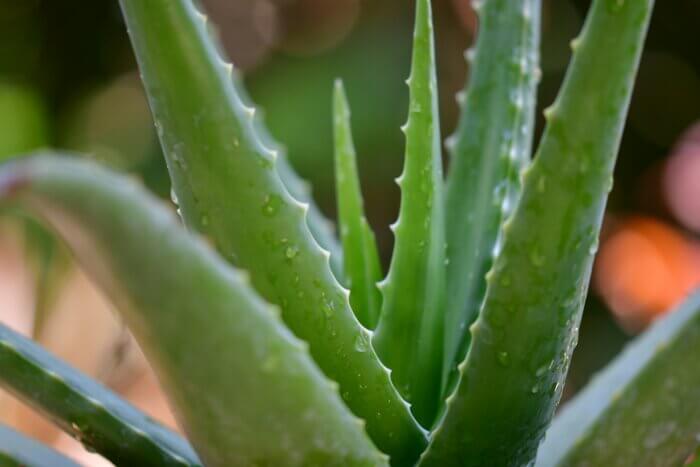
By now, anyone with style knows about cactus leather, but did you know cacti’s cousin, succulents, can also be used to create a luxurious and sustainable yarn?
Aloe wool is a round, flexible yarn that’s easy to care for and is made from breaking down the outer leaves of the aloe vera plant. Because aloe vera doesn’t need chemicals, fertilisers or additional water to grow, and is biodegradable and recyclable, aloe is environmentally friendly and perfectly in line with reducing global water use.
Aloe vera wool also helps reduce bio-waste by repurposing leaves discarded by the health food and cosmetics industries, which extract aloe vera gel for skincare and supplements. These outer leaves, or rind, account for up to 30% of the plant’s total weight, making aloe wool a promising opportunity for bio-based textile innovation.
This repurposing prevents leaf waste from generating methane, giving aloe wool a far better greenhouse gas profile than sheep’s wool, and prevents liquid aloe runoff from entering waterways, taking other chemicals from the landfill with it. This also puts aloe ahead of sheep’s wool, which contributes chemicals from sheep dip to rivers and lakes.
A silky yarn that doesn’t ‘fuzz’, aloe is stain-resistant and easy to care for – it’s even tumble-dryer safe! Soft and soothing on the skin, like the plant’s gel, which is commonly used to alleviate sunburn, aloe vera fibres are UV-resistant and moisturising.
Aloe is an emerging yarn, but Kirkby Design has already blended it with cotton to create a sustainable, sheer textile collection for homes, which won at the 2024 Dezeen Awards. On the fashion front, Italian textile innovators Maeko Tessuti & Filati Naturali offer designers a GOTS hemp and OekoTex-FSC aloe blend fabric, while sailing brand North Sails offers fashion knits made from aloe and cotton.