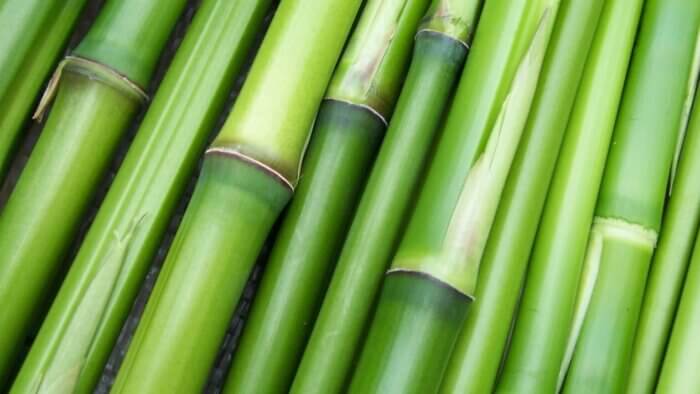
Cultivated from an ancient ‘set-and-forget’ crop, bamboo plant wool epitomises regenerative farming. Technically a resilient grass, there are thousands of bamboo species growing in various climates, with China producing the most. But don’t worry, bamboo used for wool is different to the bamboo pandas eat!
Soft and breathable, bamboo is robust for its weight, making it popular for use by athletic and underwear brands and in bedding. While many find that the lanolin in sheep’s wool causes discomfort, bamboo wool is hypoallergenic. It’s also highly insulating and is increasingly used as a base layer material for extremely cold climates.
Unlike sheep’s wool, which is responsible for enormous amounts of greenhouse gas methane, bamboo helps filter carbon dioxide and pump oxygen back out into the atmosphere.
Even areas where rain is common can face water shortages, and animal agriculture drives drought worldwide. Sheep are thirsty, especially in hot and arid Australia, the world’s largest exporter of sheep’s wool. It takes 170,000 litres of water to produce just one kilogram of ‘clean’ sheep’s wool. Water is used for drinking and to grow the crops that feed the sheep. Bamboo, meanwhile, uses minimal water and is incredibly fast-growing. Even large areas of bamboo regenerate to full size within a year of harvest, making the crop highly renewable. Plus, untreated bamboo is compostable!
One of the challenges the bamboo industry faces is ensuring the fibre’s provenance and process. Bamboo crops that drive deforestation or rely on chemicals must be avoided. As with any raw material, supply chain vigilance is essential, but with its impressive foundation as an eco-friendly fibre, bamboo is a plant wool to add to your wardrobe.
Read more: Discover Popular Plant Wools