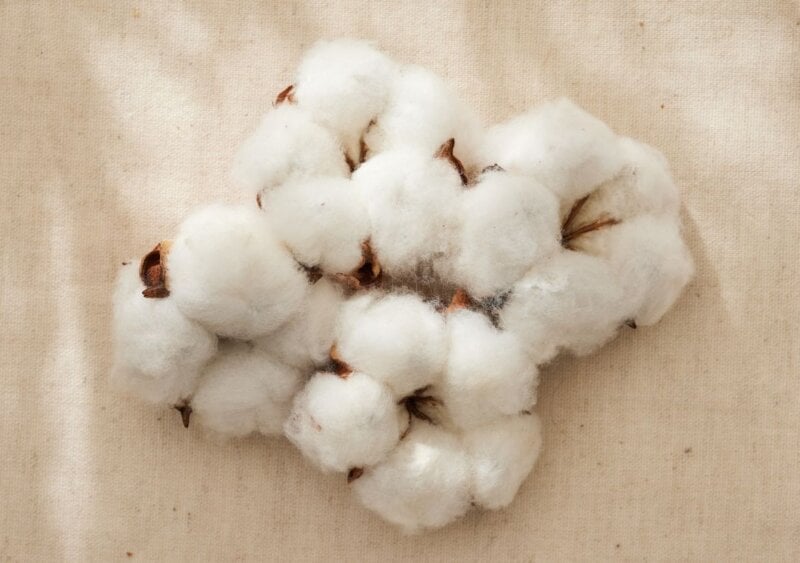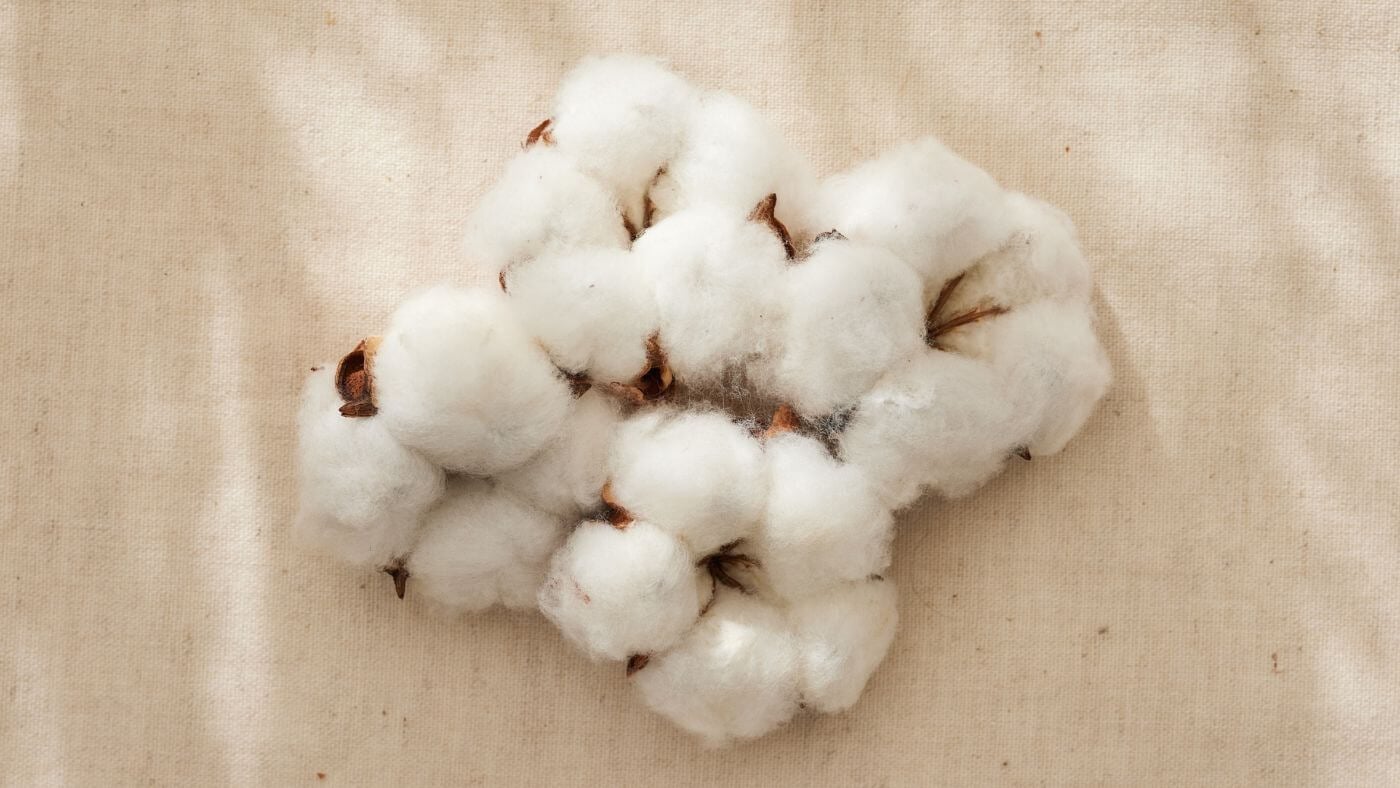
One of the most popular and enduring plant wools, cotton is versatile and long-lasting. Commonly used to create lightweight garments, cotton is increasingly starring in knitwear as a warm, animal-free choice, either alone or blended with other fibres.
As the world’s most widely used natural fibre, cotton provides an income for more than 250 million humans globally. Companies and consumers alike have long held cotton in high regard because it’s all-natural, grows well in various climates and is easily harvested. The resultant material is breathable, absorbent, and strong, with almost endless applications.
Read more: Discover Popular Plant Wools
How cotton is grown impacts its eco-credentials. Regenerative organic cotton is better for the soil, reduces chemical use, doesn’t require pesticides, and has tremendous untapped potential to become one of the world’s most sustainable crops.
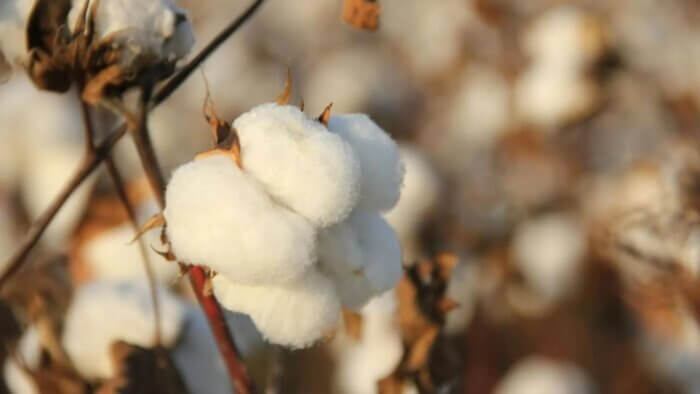
The many countries involved in its growth and the vast array of production methods employed to produce cotton fibre make comparing it to others a little complicated. Still, land use is one area where all forms of cotton perform better than animal-derived fibres.
Animals, even those confined in restrictive factory farming operations (intensive systems) designed to optimise space over animal welfare, require a lot of space, and, as a result, more agricultural land is used for producing animal-based fibres and foods than anything else. For example, wool from Australia (the world’s largest producer of wool) is a whopping 367 times more land-intensive than Australian cotton. Industry greenhouse gas estimates make a compelling case for cotton, too. Producing one kilogram of cotton generates 16.4 kilograms of CO2 equivalent, while creating the same amount of sheep’s wool generates up to 89.1 kilograms. Versatile and workable, cotton has almost endless applications as a single thread and is popularly blended with other plant-wools to create a myriad of knits.
Read more: Discover Popular Plant Wools